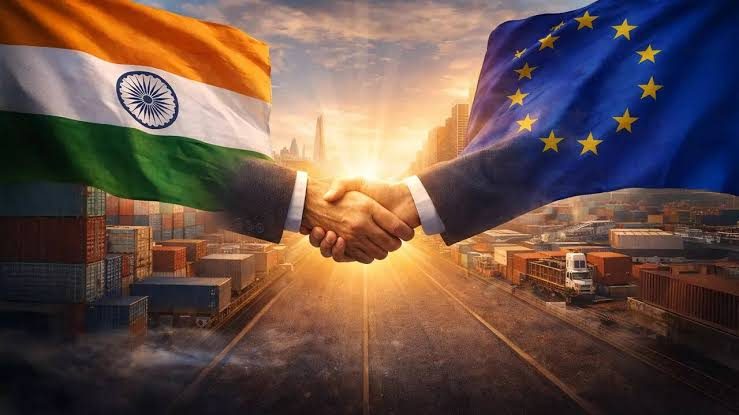
Two of the world's largest economies are preparing to transform their trade relationship. With a potential market of nearly two billion people, lower tariffs and new investment opportunities, the EU–India agreement could become one of the most important economic developments of the decade.
BRUSSELS / NEW DELHI — OCTOBER 27, 2026
The global economic landscape is changing, and Europe and India are moving toward a major new chapter in their relationship.
After years of negotiations, the European Union and India have agreed on the terms of a landmark free trade agreement designed to reduce import duties, strengthen commercial cooperation and create new opportunities for businesses.
The agreement comes at a time when international trade is becoming increasingly complicated.
Rising geopolitical tensions, changing supply chains and growing competition between major economies are encouraging governments to reconsider their economic partnerships.
Against this background, Europe and India have taken an ambitious step toward deeper cooperation.
Could this agreement become a turning point in the future of global trade?
A Historic Agreement Covering Nearly Two Billion People
On January 27, 2026, the European Union and India announced the successful conclusion of negotiations for a free trade agreement.
The deal is the largest trade agreement negotiated by either side.
Together, India and the European Union represent approximately two billion people and around one-quarter of global economic output.
The scale of the potential market makes the agreement particularly significant.
European businesses could gain better access to India's rapidly growing consumer market.
Indian manufacturers could benefit from improved opportunities to export products to European customers.
The arrangement is intended to reduce economic barriers while maintaining cooperation on sustainability, standards and international trade rules.
However, the agreement is not yet in force.
Formal approval, signature and ratification procedures must be completed before its provisions become legally operational.
A New Announcement Raises Expectations for 2027
On October 22, 2026, Indian Commerce and Industry Minister Piyush Goyal offered an encouraging update.
During a visit to Germany, Goyal said the free trade agreement could become operational in early 2027.
He indicated that the agreement might take effect within four to five months of being signed.
The two sides are working toward signing it before the end of 2026.
This potential timeline has attracted attention from European and Indian businesses preparing for changes in market access.
Nevertheless, the schedule is not guaranteed.
Implementation depends on the successful completion of the necessary procedures on both sides.
For companies, the coming months will be important for understanding when specific tariff reductions and other provisions may become available.
Europe Opens the Door to One of the World's Fastest-Growing Markets
India has become an increasingly important destination for international companies.
Its large population, expanding consumer market and growing industrial capacity create opportunities across numerous sectors.
For European manufacturers, high import duties have historically represented a major obstacle.
The new agreement aims to reduce many of these barriers.
According to the European Commission, India will fully liberalize approximately 93% of its existing imports from the EU by trade value, with additional products receiving partial liberalization.
These changes could benefit European exporters involved in machinery, chemicals, pharmaceuticals and automotive manufacturing.
Lower tariffs could make selected European products more competitive in the Indian market.
However, businesses will still need to comply with local regulations, product standards and other market requirements.
The Automotive Industry Could See Major Changes
One of the most closely watched parts of the agreement concerns automobiles.
India has traditionally maintained substantial import tariffs on foreign vehicles.
Under the agreed framework, duties on certain European cars are expected to decline significantly.
For eligible vehicles, tariffs could eventually fall from levels reaching 110% to approximately 10%, subject to quotas and phased implementation.
This could create opportunities for European car manufacturers seeking to expand their presence in India.
However, the benefits will not apply equally to every vehicle category.
Certain lower-priced vehicles and electric-vehicle arrangements are subject to specific conditions and limitations.
Indian policymakers have also sought to balance increased market access with the interests of domestic manufacturers.
The automotive provisions therefore illustrate the broader nature of the agreement: expanded trade opportunities combined with protections for sensitive industries.
Indian Products Could Become More Competitive in Europe
The benefits of the agreement are not limited to European exporters.
Indian businesses are also expected to gain better access to the EU market.
The deal will eliminate or reduce duties on a wide range of Indian products, including textiles, clothing, footwear, leather goods and selected agricultural products.
India has a substantial manufacturing presence in several of these sectors.
Lower import tariffs could help Indian exporters compete more effectively in European markets.
For European retailers and consumers, this may eventually mean a wider range of products and potentially lower prices in some categories.
However, tariff reductions do not automatically translate into equivalent retail price reductions.
Transport costs, exchange rates, competition and other expenses also influence consumer prices.
Wine, Food and Agricultural Trade Enter a New Phase
Agricultural and food products are another important part of the agreement.
India has agreed to reduce tariffs on certain European products, including wine and olive oil.
For example, tariffs on European wine, previously reaching 150%, are expected to fall substantially under the agreed framework.
Some categories will benefit from lower duties immediately after implementation, while others will follow transitional arrangements.
European agricultural exporters see potential opportunities in India's expanding market for premium food and beverages.
At the same time, sensitive agricultural sectors remain protected.
The agreement does not establish unrestricted free trade in every product.
Specific protections and limitations remain for categories including rice, sugar and certain animal products.
This reflects the importance of balancing commercial opportunities with domestic agricultural priorities.
Why Europe Is Looking Toward India
The agreement comes during a period of uncertainty in international commerce.
Trade disputes, tariffs and geopolitical developments have encouraged businesses to diversify their supply chains.
For the European Union, strengthening relations with India could reduce excessive dependence on a limited number of trading partners.
India offers a large domestic market, growing industrial capacity and an established technology sector.
European companies may also benefit from additional opportunities for investment and cooperation in manufacturing and services.
For India, closer relations with the EU could support exports, investment and access to advanced technologies.
The agreement therefore represents more than a simple reduction in customs duties.
It is part of a broader effort to strengthen the economic relationship between two major international markets.
Technology and Artificial Intelligence Could Benefit
The future of international trade is increasingly connected to technology.
Artificial intelligence, digital infrastructure, telecommunications and advanced manufacturing are becoming important areas of global economic competition.
Europe has considerable industrial expertise, research institutions and technology businesses.
India has a large IT services sector and a growing technology ecosystem.
Closer economic cooperation could help companies establish new partnerships and expand digital services.
In July 2026, the EU and India also strengthened their cooperation through the Trade and Technology Council.
The initiative focuses on cooperation in areas such as emerging technologies, supply chains and digital development.
These efforts could complement the free trade agreement.
However, not every technology initiative is part of the agreement itself, and the development of specific projects will depend on future decisions.
What Does the Deal Mean for Ordinary People?
Large international trade agreements may seem distant from everyday life.
Yet they can influence the availability and cost of products, employment opportunities and business investment.
For consumers, lower tariffs may eventually improve access to imported goods.
For businesses, simpler trade procedures can reduce certain costs associated with international commerce.
Exporters may gain opportunities to reach new customers.
Manufacturers may have more options for sourcing components and materials.
However, the effects will vary between industries.
Some businesses may benefit from stronger demand, while others could face increased competition.
The overall impact will depend on how the agreement is implemented and how companies respond.
Could the Agreement Change Global Supply Chains?
International companies are increasingly reconsidering where they manufacture products and source materials.
Trade restrictions and geopolitical uncertainty can make dependence on a single market risky.
A closer EU–India trading relationship may encourage businesses to diversify some of their operations.
European manufacturers could expand commercial activities in India.
Indian companies may find new opportunities to supply European industries.
Such developments could support investment in logistics, transportation and industrial infrastructure.
Nevertheless, major changes in supply chains take time.
Companies must consider labor availability, infrastructure, regulatory requirements and long-term commercial demand.
A trade agreement can create opportunities, but it cannot guarantee that every investment will succeed.
What Happens Before the Agreement Takes Effect?
Although negotiations have concluded, several important steps remain.
The European Commission submitted its proposals for signature and conclusion of the agreement to the Council of the European Union on September 11, 2026.
The agreement must proceed through the relevant EU approval process.
This includes Council decisions, signature and the consent of the European Parliament.
India must also complete its domestic procedures.
Only after the required formal steps have been completed can the agreement enter into force.
For businesses, this distinction is important.
The announced tariff reductions should not be treated as already applicable until the relevant provisions become effective.
Will Europe and India Reshape Global Trade?
The agreement arrives at a time when governments are reconsidering international economic relationships.
Many countries are seeking stronger commercial partnerships, greater supply-chain resilience and new investment opportunities.
The EU–India agreement demonstrates that large economies remain interested in reducing trade barriers despite wider international tensions.
However, the long-term impact is not guaranteed.
Economic growth, political decisions, regulatory requirements and global market conditions will influence the results.
The most important test will be whether businesses can translate the agreement into real commercial activity.
Conclusion: A New Chapter in the Global Economy
The EU–India trade agreement represents a major development in international commerce.
With a combined market of approximately two billion people, it could create substantial opportunities for exporters, manufacturers and service providers.
Lower tariffs and improved market access may strengthen economic ties between Europe and India.
The latest statements from Indian officials have increased expectations that the agreement could become operational in early 2027.
But its practical impact will depend on formal approval and successful implementation.
The global economic order is changing, and the partnership between Europe and India could become one of the most important examples of how major economies are adapting to a new era of international trade.
For businesses and consumers on both sides, the coming years could bring significant changes.
And for the wider world, the agreement sends an important message: even during a period of economic uncertainty, international cooperation can continue to create new opportunities.